
Year Time Capsule
Remember 1931
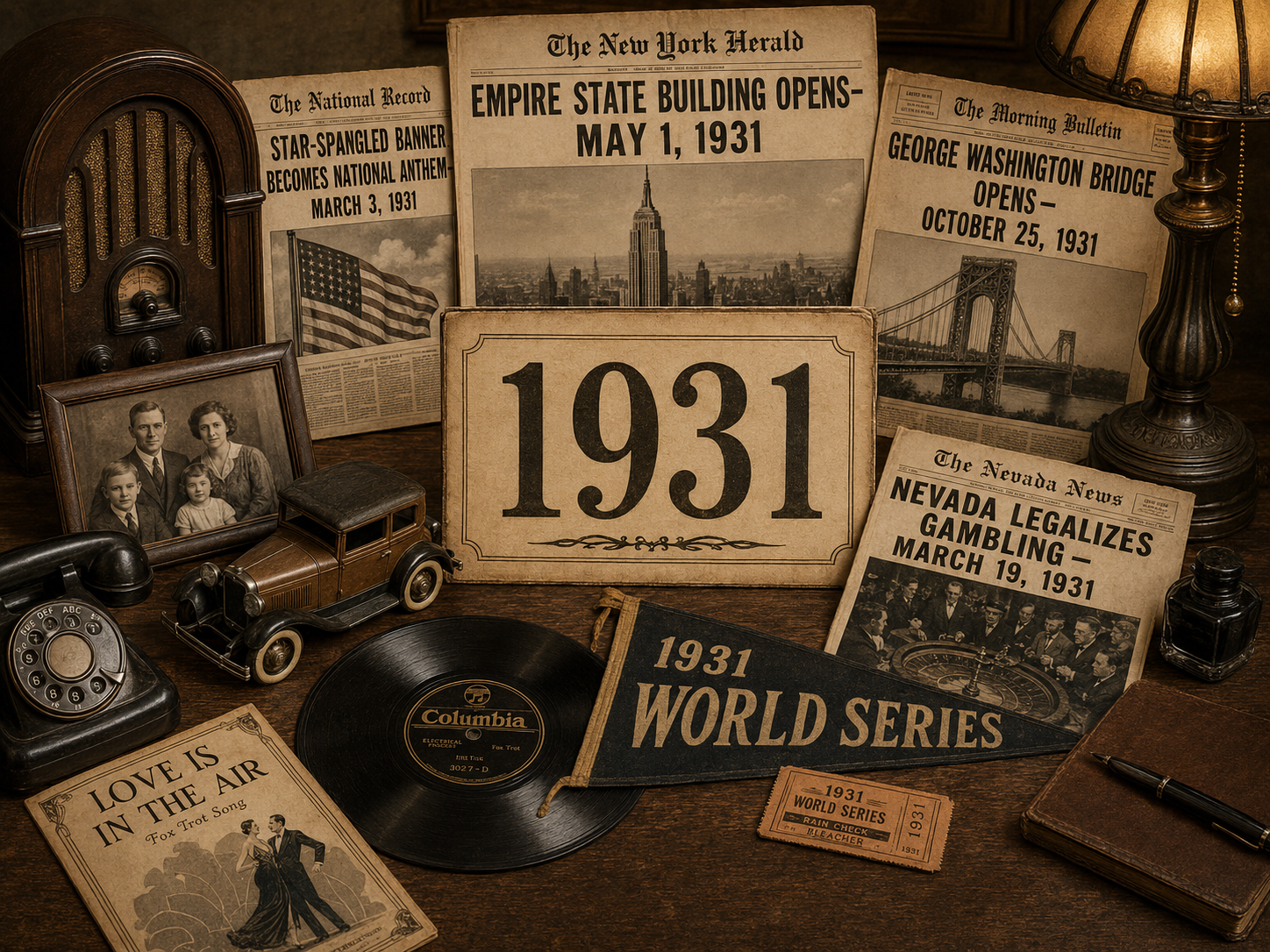
1931 was a year of radio nights, Depression-era worry, newspaper headlines, bridge openings, skyscraper pride, movie monsters, family budgeting, and small comforts at home. It was the year “The Star-Spangled Banner” became the official U.S. national anthem on March 3, Nevada legalized gambling on March 19, the Empire State Building opened on May 1, the George Washington Bridge opened to the public on October 25, and the St. Louis Cardinals won the World Series on October 10.
On This Page
Quick Look
1931 At A Glance
Before we open the full scrapbook, here are the dated milestones, pop culture moments, and everyday memories that help define 1931.
The Sound Of 1931
Music In 1931
The sound of 1931 lived in radios, records, sheet music, dance halls, movie theaters, and family parlors. People were under real financial pressure, but music still gave the year rhythm, romance, humor, and a reason to gather around the radio after dinner.
“The Star-Spangled Banner” became the official national anthem on March 3, 1931, giving the year one of its clearest dated music moments. Popular songs and recordings connected to the year included “Minnie The Moocher,” “Dream A Little Dream Of Me,” “Life Is Just A Bowl Of Cherries,” “Goodnight Sweetheart,” and other songs that moved between radio, records, stage, and screen.
Music in 1931 could feel elegant, jazzy, sentimental, funny, hopeful, or lonesome. It was not just background noise. In hard years, a familiar melody could make a kitchen, boarding house, apartment, or farmhouse feel warmer.
1931 Music Memory
A 1931 song might come through a cathedral radio, a scratchy record, a dance-band broadcast, or a movie theater speaker, but it could still stay in someone’s head all week.
Screens And Speakers
Movies And Radio In 1931
Movies in 1931 were still adjusting to the sound era, but the year gave audiences some unforgettable screen memories. City Lights showed that a mostly silent-style film could still move audiences. Dracula and Frankenstein helped define classic monster movies. The Public Enemy and Little Caesar brought crime stories and tough screen personalities into the decade’s movie conversation.
Cimarron became one of the year’s prestige films and later won the Academy Award for Outstanding Production. Theaters were still a major escape during the Depression, offering newsreels, cartoons, comedies, dramas, musicals, and feature films for people who could spare the price of a ticket.
Radio was even closer to home. It gave people music, comedy, stories, news, sports, political speeches, advertisements, and a sense that the wider world was coming through the speaker. In 1931, the family radio could be entertainment, information, comfort, and company all at once.
1931 Screen Memory
Movie monsters were finding their voices, gangsters were filling the screen, and the radio was still the voice of the household.
Childhood Memories
Toys, Kids, And Home Life In 1931
Childhood in 1931 depended heavily on the family’s circumstances. Some children had dolls, toy cars, marbles, tin toys, blocks, balls, paper dolls, books, puzzles, and board games. Others made their fun from whatever was available: scrap wood, bottle caps, string, sidewalk games, homemade toys, hand-me-downs, and neighborhood imagination.
Radio shaped childhood too. Kids heard comedy voices, music, serial stories, sponsor jingles, and news along with the adults. Comic strips, Sunday papers, movie matinees, schoolyard games, and family storytelling all helped fill the spaces that later generations would fill with television.
At home, Depression-era habits were becoming more important. Clothes were mended. Food was stretched. Toys were repaired. A small treat mattered. A borrowed book mattered. A board game or radio program could become the highlight of the night.
1931 Kid Memory
A 1931 childhood could mean marbles in a pocket, a toy car on the floor, a newspaper comic strip, and everyone listening to the same radio in the evening.
Around The Table
Food, Home, And Everyday Life In 1931
Food memories from 1931 are tied closely to thrift, planning, and stretching what the family had. Soups, beans, bread, potatoes, oatmeal, canned goods, garden vegetables, leftovers, coffee, simple cakes, sandwiches, and inexpensive cuts of meat all fit the household picture.
Bisquick was introduced in 1931, which made it a real year-specific food memory. It fit the mood of the time because it promised speed, practicality, and reliable results for biscuits, pancakes, and other simple baked foods.
Everyday life in 1931 was practical and careful. Families listened to the radio, read newspapers, watched prices, reused what they could, repaired what they owned, and talked about work, money, banks, crops, bills, and the future. The kitchen table was not just where people ate. It was where the family made plans.
1931 Food Memory
A 1931 table could feel simple, filling, careful, and resourceful, with every meal shaped by price, pantry, and practicality.
Headlines And Games
News, Culture, And Sports In 1931
The Great Depression shaped the mood of 1931. Families were worried about jobs, banks, farms, wages, savings, and the price of everyday goods. Newspaper headlines were not just distant stories. They affected what people bought, what they ate, where they worked, and how they planned for the next week.
Several 1931 headlines still stand out clearly. On March 3, “The Star-Spangled Banner” became the national anthem. On March 19, Nevada legalized gambling. On March 25, the Scottsboro Boys case began in Alabama. On May 1, the Empire State Building opened. On October 25, the George Washington Bridge opened to the public.
Sports gave people a different kind of drama. The 1931 World Series ran from October 1 to October 10, with the St. Louis Cardinals defeating the Philadelphia Athletics in seven games. For people following by newspaper, radio, or word of mouth, baseball could still offer something to argue about, cheer about, and remember.
1931 Headline Memory
1931 had worry in the economy, pride in new landmarks, major legal and civil rights headlines, and baseball drama that gave people something else to talk about.
Memory Joggers
Questions That Bring 1931 Back
Use these prompts to remember the year yourself, ask an older relative, or start a family-history conversation about life in the early 1930s.
What Did The Radio Sound Like?
Think music, comedy, news, sponsor messages, distant stations, serial stories, and a family gathered around one set.
What Movie Would People Talk About?
Think City Lights, Dracula, Frankenstein, Little Caesar, The Public Enemy, Cimarron, or a local movie palace matinee.
What Food Feels Like 1931?
Think biscuits, soups, beans, bread, potatoes, oatmeal, leftovers, canned goods, simple cakes, coffee, and careful shopping.
What Headline Would People Remember?
Think the national anthem, Nevada gambling, Scottsboro, the Empire State Building, the George Washington Bridge, and Depression-era news.
1931 FAQ
Questions About 1931 Nostalgia
What Was 1931 Best Known For?
1931 is remembered for “The Star-Spangled Banner” becoming the national anthem on March 3, Nevada legalizing gambling on March 19, the Scottsboro Boys case beginning on March 25, the Empire State Building opening on May 1, the George Washington Bridge opening to the public on October 25, and the continuing effects of the Great Depression.
What Movies Were Popular In 1931?
Major 1931 movie memories include City Lights, Dracula, Frankenstein, The Public Enemy, Little Caesar, Cimarron, and other early sound-era films that shaped the decade’s movie culture.
What Music Was Popular In 1931?
1931 music memories include radio songs, dance-band music, sheet music, records, and songs such as “Minnie The Moocher,” “Dream A Little Dream Of Me,” “Life Is Just A Bowl Of Cherries,” and “Goodnight Sweetheart.”
What Was Everyday Life Like In 1931?
Everyday life in 1931 was shaped by the Great Depression, radio entertainment, newspapers, careful food planning, mended clothing, homemade fun, family budgeting, and small comforts that helped people get through hard times.
Source Note
Remember That Year uses a mix of historical references, pop culture records, official archives, and nostalgic storytelling. For more historical context, visit HISTORY’s 1931 archive, General Mills history on Bisquick, History.com on Nevada legalizing gambling, the Smithsonian National Museum of African American History and Culture on the Scottsboro Boys, Empire State Building history, History.com on the George Washington Bridge dedication, The New Yorker on the George Washington Bridge opening to the public, and Baseball Reference on Game 7 of the 1931 World Series.